Showing posts with label Beverly Crusher. Show all posts

Monday, 13 June 2016

Back to the Books: Death in Winter

This is the first in our regular(ish!)look at the ever expanding Star Trek Literary Universe in the hands of our newest SKoSTer Ian Kimmins.


We will be following the post-Nemesis reading list here for reference as we progress!

For many longtime Star Trek novel readers Michael Jan Friedman's name has been synonymous with quality Star Trek novels and this one is definitely worth your time. 

All throughout The Next Generation fans have wanted to see Captain Picard and Beverly Crusher get together. They have had a couple of false starts and even a divorce (All Good Things...) over the years but this is the book that sees them finally get together. 

As Death in Winter opens Picard is content to have Beverly as a close friend. However when Beverly decides that this isn't enough for her, she leaves the Enterprise to become Chief Medical Officer at Starfleet Academy. Captain Picard is just getting used to this when he learns Beverly is missing in action- and is presumed dead!!

Naturally Picard wants to head to Kevratas - the world where Beverly was last seen. Starfleet agrees and Picard recruits two old colleagues from the USS Stargazer, Pug Joseph who has past issues to resolve and Doctor Carter Greyhorse, who has previously served time for murder. 

As the world they are travelling to is the far side of the Romulan neutral zone they recruit a mysterious Romulan who had left many years ago and never expected to be back. They must work together in the hope they can assist in helping the natives plague ravaged world and find out what happened to Beverly. 

Meanwhile Romulus is trying to recover from the events of Star Trek Nemesis and Shinzon's demise has led to his zealous supporter Senator Tal'aura grabbing power but there are many who oppose her including Commander Donatra. Naturally this leads to conflict between them and does set up one of the characters for future books.

By the time this story wraps up the Romulan empire has been shaken to it core and some of the Enterprise's crew lives have been changed for good.

While this is the accepted jumping on point for anyone looking to get into the Star Trek Literary Universe I found having read the A Time To series massively helped the story to flow much better. If you want to get stuck in you can start here and you will figure it out pretty quickly!

Even though we pretty much know what way the book is going to end it is a lot of fun getting there. The adventure flies by and it is nice to see some characters who appeared in earlier novels by the author make an appearance. There are a few continuity points in this book that are later changed such as Janeway knowing Worf where as later on it is established that they don't! 

But as a book to launch the new literary verse I would highly recommend this!

Check out and subscribe to our monthly podcast. You can find us on iTunes, Soundcloud and Stitcher by searching "Some Kind of Star Trek". Episodes one and two are live NOW!

Live on YouTube
Like our page on Facebook 
Follow us on Twitter
+1 us on Google+
Add us on Tumblr
Join the conversation on Star Trek: Risa 

Wednesday, 29 April 2015

McCormack Goes Missing


After having a wonderful chat with Una McCormack at First Contact Day I felt it only right to get stuck in to The Missing.

Now Una had dropped a couple of hints about a character and also how it did crossover with characters from other Star Trek shows but it didn't take me long to realise just how different Deep Space Nine has become in the years it moved from TV into the literary universe.

For one thing the subtitle of Deep Space Nine may as well purely refer to a location now more than to the ensemble of characters fans of the show knew and loved. There's no Sisko, Kira, Dax, Bashir, Worf or Nog for starters so that leaves you with Odo, Quark and a cameo appearance from Garak early on. O'Brien gets name checked a couple of times but the cast is balanced out with The Next Generation's Katherine Pulaski, new CMO of the station Beverley Crusher and now station commander Captain Ro Laren. 

Not a bad thing and I guess the book has to come under some form of banner given that it takes place on the recently built hi-tech Deep Space Nine station - but my warning to fans would be not to expect your favourites to turn up any time soon - a lot has changed.

But then I asked myself if all that really mattered and the answer was "no" because things are transient and it would be wrong to assume everyone would stay in the same place (unless you happen to be on Kirk's Enterprise) and with the expanded universe taking the story far beyond the end of Nemesis, the 24th Century has become a very interesting place.

Occuring after the end of the brilliant (can't say that enough) The Fall series from 2014, McCormack drops us back to the Bajoran sector where assisting an alien race looking to relocate is the name of the game. Fairly straight forward you might imagine but then this is Star Trek and we have another 300 pages to go so it can't just end there. Let's drop into the mix Pulaski about to head off on an Olympic Class starship, the Athene Donald, for regions and missions unknown and things start to take shape.

Not only do we get (I believe) the first meeting between the two former USS Enterprise-D Chief Medical Officers but the relationship between them is just as frosty and just the good side of adversarial and perhaps jealous as we would like. There's certainly no love lost and McCormack does make you feel that all their conversations take place behind gritted teeth with both of them having a certain bald starship captain at the back of their minds for every single word. In fact out of the whole book - which I burned through in a weekend - this was the highlight of the show and their meetings electrified every page they were on. I really felt Una hit these two perfectly in an environment we would never have placed either of them.

But that's only a portion of the story. Captain Ro has a new alien race looking for a home to deal with the People of the Sky but hey, just when we think Pulaski is out of the way she and the Athene Donald run into The Chain. No, not a Fleetwood Mac tribute band or a group of people attempting to buy each other's houses but an  offshoot of the race linked to Ro's recently arrived asylum seekers.

Convienient that this all happens at the same time? Possibly, but then it'd be a terrible story if half of it didn't happen if you catch my drift. The station and our characters are firmly planted between the two factions and there's a certain air of Sanctuary mixed in here.

A more interesting element that does mirror some of the earlier elements of Deep Space Nine and especially Homecoming are the missing soldiers from the Dominion War who, ten years later, have still not been returned from the Romulan Empire. It makes for a more interesting line as Ro acts as the mediator between the two races in the hope of a peaceful resolution. 

Oh and have we forgotten to mention the Tzenkethi?

Potentially but hey, why not now. Yes, McCormack even throws in one of the staples of the literary universe and member of the Typhon Pact, the Tzenkethi with one of their number playing an intricate part within the whole story almost from the first page. While not what she seems, Cordazame proves to link several elements of the story together while adding elements of mystery herself. One issue I do have here is that a solution I would expect to find (and we did) within the JJ Abrams movies is used here as a plot device. While I understand why and how, I did feel it detracted from the story and made me much more aware of the recent movies in relation to the Prime Universe than I might have expected.


Besides, McCormack has so deftly crafted several miniature arcs within this book that I could almost forgive mention of this Plot Device since it's rare to get so many elements all together through the course of just one Star Trek novel. Keeping track of them is certainly a skill and I found it easier to read in big chunks rather than a few pages here and a few there which might have meant I lost a strand. 

Having just a small, core group of main characters does work very effectively and Una has both doctors down pat. Pulaski is, as we've written, nicely crusty and just far enough into the belief in her own greatness while Beverley remains firmly grounded, ever the realist and certainly the diplomat her on Deep Space Nine. For the most part I found these two to be the best characters to follow within The Missing. Ro was OK but her journey from Starfleet to Maquis to Starfleet and ultimately captain of the most key outpost in the Federation never really ran true with me. This in turn made me feel the Bajoran captain was pretty average and didn't stand out well enough. 

Odo and Quark were great additions with the former almost fitting seemlessly back into a law enforcement role but its his albeit brief interactions with the ever-wise Ferengi bartender that remind us of one reason why Deep Space Nine was the best Star Trek series produced.

The Missing might not be an absolutely perfect novel, devoid as it is of the majority of recognisable Deep Space Nine characters as well as that Dominion threat which is long gone. Having this replacement station too only adds to distance the station of the page from the station of the show but none of this can be directed at the author who has still pulled a great read together from a very diverse range of people and situations and managed to resolve it within just one book. There are twists, turns and duplicity galore to keep fans entertained from the start here and some that I didn't expect.  I'd certainly recommend giving this one a go but try and read it in a few sittings rather than bitty dippings. Great to see the station back and fortunately we won't have long to wait for a return with David Mack's Sacraments of Fire coming soon.

For now though I'm turning my reading attention to Takedown which arrived last week and is set at the same time as The Missing. Back to the Enterprise we go!

Have you read The Missing? What were your thoughts on Una McCormack's latest Deep Space Nine novel? Let us know in  the comments below!

Like our page on Facebook 
Follow us on Twitter
+1 us on Google+
Add us on Tumblr
Pick us out on Pinterest
Add to to conversation on Star Trek: Risa

Wednesday, 5 March 2014

Welcome to the Future


A great deal of the fan-made productions right now are relying on the (cheaper to film) Original Series as the basis for their stories.

One exception to this rule is a project that has only recently come to light (in the last couple of months) in the form of Star Trek Futures.

Ok - brief overview time; it's certainly different, making a nod to alternative realities rather than the staple of the Prime Universe we've been familiar with since 1966. Now we could easily just waffle on and copy some stuff direct from the Futures website but we're not like that as regular followers will appreciate. So let's get to the core, let's get into the background and really understand the concept. Now I'm not the best person to tell you about what makes it all tick however I do know a man who can. Put your hands together and welcome Dan Thale to SKoST Towers....

How long has Futures been a dream before it started to take form? What was your inspiration?

Armin Es'al (Cae Ambassador)
To start off some of my biggest on screen influences excluding Star Trek are 2001, Blade Runner, and the anime, Cowboy Bebop. The initial idea of doing a film dated back to 2012 and originally the project was entitled The Red Planet and didn’t involve Star Trek at all. The spark of influence for that project came from an article in regards to brutalist architecture construction during the reign of the Soviet Union. (Google that and tell me those buildings don’t scream SciFi at you.) Anyway, the elements from this original story are structuring the main plot in Star Trek Futures. So this includes the Cesera system, the three different groups involved, and “retro” look and feel of the Cae.

In that story the protagonist experiences a loss and thus has a different view of the world around them. Sound familiar? Being a huge Star Trek: The Next Generation fan it dawned on me that I was telling the story of Wesley Crusher. However in The Next Generation Wesley never really knew his father. So mid to late last year (2013) I decided to scrap most of The Red Planet idea and rewrite it as being a Star Trek first, story.

A'Ren
Why the JJ timeline?  Is it the JJ timeline?!

To accomplish the story of bringing Wesley and his father together I needed a clean slate. So yes in a nutshell, it is the JJ Timeline. Or you can think of it as just one of the emerged alternate universes from the TNG episode, “Parallels” if that gets you in a tizzy. Anyway, you can say what you will about the new timeline and those movies, our story stands alone and only has a few things in common with those stories; namely the destruction of Vulcan and some costume influences. I think I always connected with Wesley and wanted to explore the possible relationship between him, Jack and Beverly. In whatever form it takes, a supportive family really molds an individual and I wanted to give Jack a chance to be a father.

Are we expecting some serious stellar action here?

The short answer is yes, there will be action, but the majority of the cinematography will be focused on telling the story through dialogue and appropriate framing etc. As my influences have shown you don’t necessarily need big flashy action sequences to get a story across. Additionally action is expensive and thus has to be treated with the utmost restraint. The story that we are attempting to tell is based on mystery, intrigue and seriously deep running emotions.

Is it significant that we are on the Enterprise-C and why that ship?

There are a few explanations for using the Enterprise-C. Firstly, we only saw her on-screen once in Yesterdays Enterprise. This was surprising to me as the craft carries the name Enterprise (the flagship of the fleet), yet it's seen less than other ships of that period. So I knew I wanted to shine the light on her. I also thought that the Captain Garrett character deserved the same treatment. Secondly, I had found out that the ship that we do see in Yesterdays Enterprise was not the original design for the Ambassador class. 

The original design was done by Andrew Probert during the first season of The Next Generation. Since he had left the production by season three and various other reasons the design was changed to the model most associated with the Ambassador class. I really wanted to use this original design as I feel it is superior to what we see on-screen. Just a personal opinion. Also, setting our story in the alternate timeline gives a simple explanation as to why "our" Enterprise-C is different than what we've seen before.

Jack Crusher
How will the Crushers differ and can we expect some familiars to turn up? Picard, Pulaski? Riker?

The Crushers will obviously have a different dynamic since Jack is now in the picture. Through the limited lens of The Next Generation we know that the relationship between Jack and Beverly was incredibly deep and strong. So we'll get to see that. We'll also get to see Wesley as a younger child who is just coming into the age of real deep human emotions and awareness of serious consequences from his actions.  Other than the four characters, Jack, Wesley, Beverly, and Rachel Garrett, there won't be any other characters from previous Trek. Personally I feel to incorporate characters that were incredibly popular, yet are too far outside of the integral story ends up hurting the feeling of the film. At some point it just turns into fan service, which is not what this project is about. My train of thought in this regard - If it's not important to the story then it's not going to be on screen.

What makes this different to all the other fan fiction series? It's quite a cluttered market at the moment -  surely there's a lot out there to contend with?

Wesley Crusher
I agree that the fan film space is a little cluttered at the moment.... but that's a GREAT thing for Star Trek! 

In my opinion the more Star Trek that is out there the better. That being said Futures will be vastly different from other fan films. We aren’t trying to compete whatsoever with other productions. It will have a look and feel all it's own and to my knowledge, we are the only production taking place in this time period or even with these characters. We aren't trying to recreate anything, get CBS to notice us, or impress the audience with high-end techno-babble. We are going to tell our story in the way that we feel fit and not be beholden to any previous dogma of what Star Trek should and shouldn't be. It'll be modern, artistic and passionate.

What's the concept and idea behind these more Star Wars Empire coloured uniforms? Is that a hint of movie uniform style? 

1. Budget - to use the original Wool Elastique and color of the Monster Maroon it would have just cost too much money. It was also difficult to find the correct color.

Beverly Crusher
2. Reusability - I knew we would only be able to afford a set number of these uniforms as they have a reputation for being quite labor intensive to assemble. So we couldn't make two or three for each main cast member. So I knew we would have to come up with a design that could easily be reused. The lower armband showing rank is removable, the second set of rank insignia are on the collar of the uniform and not the jacket itself. There are some edging details that are being minimized and simplified to make it a little easier for our tailor.

3. The Collar - It seems as though in every Star Trek series some designer creates a costume that lacks a collar. Eventually they end up adding one and it improves the look of the character ten fold in my opinion. Take Odo from Deep Space Nine for example. Weird long necked shapeshifter in the first couple seasons, they add the collar and he looks instantly more professional like a proper law enforcement official should. Also an issue I had with the original Monster Maroon uniform was when an officer took off his or her jacket there wasn't anything on them to denote rank. Now that the The Next Generation style pips are on the collar this solves this problem. This also goes for any of the flash back stuff we see in The Next Generation.

4. Mix and Match - I know I'm gonna get it for this one, I like the grey dress uniforms in Star Trek Into Darkness, but I also like the uniforms from Star Trek First Contact.  So I split the difference between the two and came up with the grey.

5. Something Different - Why not?!

This looks like it's going to be DARK...?

Dark - Yup 

What's your next major goalpost?  How will this be funded? Any perks for donations ala Kickstarter or Indegogo?

Right now we are solely focused on building the look and feel of this new world, writing the screenplay, and gathering the best equipment we can for our budget. We've just begun creating costumes and physical props. In regards to the short film, and everything up to the completion of that, Star Trek Futures will solely be funded by myself. I'm going 110% on this project so literally every bit of cash I have is going into this. So in that vein, the goalpost would be to complete the short film. 

Post short film, we're going to do a Kickstarter with some cool rewards for backers. We're looking at having some "propaganda" style posters made up as well as some little 3D printed models of the Enterprise-C, Cae cruiser, and the Ra'Zae battleship. We're still working on the designs for the ladder.

Is this a set arc storyline?

Yes absolutely. The story is going to take place over five episodes and will have a clear overarching serialized format.

Are we looking at sets or CGI /blue screen and what resources in the Star Trek universe have you been tapping to get this off the ground? What makes this interesting for the techie Trekker?

When inspecting the landscape of current fan films I noticed that a lot of the films rely heavily on CGI backgrounds. Not to say that this is a good way of achieving a setting, but I firmly believe that if you really want to pull your audience into the world you need a physical set with physical things to interact with the actors. Proud to say that I was a handyman for about five years so I definitely know my way around lumber and power tools. 

So suffice it to say, the goal is to create as many physical sets as possible. Couple that with the style of filming we are going to use I believe that we'll be able to create a believable set using the limited resources we have. We've already begun working with some talented people to create some Star Trek VI style lighted LCARS panels as well as some fantastic matte paintings. 

Again, harking back to some of the other fan films; there is a clear reliance on techno-babble. Personally I love all of it, but we are really trying to appeal to a wider audience and will NOT rely on tech driven dialogue. That being said, we will definitely be throwing a bone to those hardcore techie Trekkers. So not to worry, there will be plenty of plasma manifold malfunctions and dilithium instabilities. :)

Isn't doing this in the more The Next Generation century going to be more expensive than Phase II or Continues? If so, why/why not?

Not necessarily, but everything costs $$$. We are heavily inspired by some of the classic SciFi movies of the late 70's which don't necessarily have big flashy lighted sets and such. The way that much of physical design of costumes and set pieces is being flushed out now. We enjoy brain storming different ways of creating amazing looking stuff on our hairline budget.
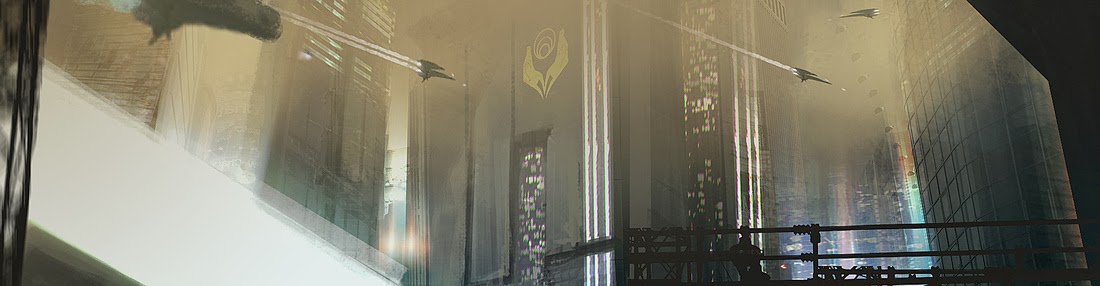
Cesera Prime
Are we right in thinking the show will be set in a fixed set of locations with an arc story something akin to Deep Space Nine?

Yup you are exactly correct. The entire story takes place inside the Cesera System which resides on the far side of the Beta Quadrant. It is about 10 light years from the Romulan Neutral Zone and is situated between Starbase 123 and 174.

So who's come up with the artwork so far and have you got any teaser images we can use?  How did you get them on board and  what more will be coming?

Un'Cerar
We have an amazing concept artist named Markus Lovadina. I found him after an exhausting search of Deviantart.com. His landscapes, as well as his character concepts really stood out to me. I immediately knew that he was the right man for the job. He has been simply incredible and  has been completely instrumental in flushing out the vision for Star Trek Futures. I've stuck solely with just him because I really wanted too have a singular vision and style for all the artwork. In my eyes it's important to have a high level of quality as well as consistency. 

Our work flow begins with me writing out a description of what I am looking for. He then extrapolates on that, asks any questions, and does a first draft. Then it gets tossed back and forth as many times as needed until I'm happy. I have to say that I can be incredibly picky in regards to artwork so I sincerely appreciate his constant show of patience. I can't draw to save my life so he is an invaluable asset to Star Trek Futures. We are on a weekly release schedule for publishing artwork so always expect something new mid-week. Artwork can always be found at our website as well as our other social media pages.

The Futures certainly looking good and our thanks to Dan for taking time out from his schedule to talk to us about this unique project. From what we've learnt here and through their media outlets this will certainly be a challenging project especially, if not only because of the choice of time period in which the arc will be set. With such prospects we'll be sure to keep track and update our followers as the Crushers return to the stars...

For more information on Star Trek Futures take a stroll over to their sites and pages which we've listed below.


Saturday, 8 June 2013

A Certain Continuity: Star Trek: The Next Generation Season Six


I've come to the end of the sixth year of The Next Generation. One to go.

With season five I managed a few episode pieces but time and Star Trek news have been against me which meant only Schisms and Chain of Command were given a run out in blog form. With my attention turning to the 1993/94 season very soon, I'll be using that time to reflect back on some of the things and themes that made the series tick for me over the course of 178 episodes.

But for now let's look at the last 26 episodes that I've powered through, accompanied in my watching by my one and a bit year old son. Start 'em early....

While the fifth year turned experimental and delved into some quite personal issues as well as coping off-screen with the death of Star Trek creator Gene Roddenberry, I was never the greatest of fans. At the beginning of the sixth season the first two episodes originally left me incredibly cold and worried as to where the year was going to be heading. Time's Arrow had provided a thrilling conclusion but the season opener was a massive comedown from all the set up of the previous year. Indeed, there had been a lot of escalation and only 45 minutes to conclude the story which could maybe have done with a third part to ensure that it didn't come across as rushed as it did. While on the re-watch it's not a bad episode it's not the way you would hope to start a season. It's very convenient and when Data turns up as if by magic I still find myself cringing. 


While a return to Realm of Fear made me realise it's not as hokey as I first thought, it's not until Relics that we see any sign that this season has promise. I would go as far to say that not since season two had I experienced such a mediocre start to a year of The Next Generation. Relics is undoubtedly one of the classics of The Next Generation's entire run and a personal favourite. It is still the only episode of Star Trek I have ever watched more than once in the same day. Schisms isn't a high profile episode yet it does manage to reaffirm the average nature of the early season with True Q, Rascals and The Quality of Life close by doesn't help. Now I'm not saying they're rubbish, just less than you would expect from a show that's heading into its sixth series.

Maybe the point that this is the first season completely without the influence or guidance of Gene Roddenberry; how would the final two years have turned out if he'd still been around to oversee (and would we ever have seen Gambit make it past draft status?!). When you look at the quality you might question what had happened in the hiatus because it's a very slow start as though the show is trying to reaffirm itself with the Scotty driven Relics as the head and shoulders above those first dozen-or-so episodes. It's a different tack and that's more evident when you read the season notes in the Star Trek: The Next Generation Companion by Larry Nemecek. The opening of the sixth season was designed to be more experimental and away from the "soap opera" of the fifth. Sadly time constraints meant that they had to produce the latter half at speed and waiting for stories to develop wasn't an option. Odd because I actually think that once the series bedded down and had the pressure of deadlines to meet it becomes a much better and more concentrated animal producing some superb installments and much more watchable TV. Experimental is good but the early part of this year might be just pushing that boundary even for Star Trek. Perhaps it's something to do with retaining that "believable" factor. Also notable after only a few episodes is the sudden absence of Alexander, Ro and Guinea who all vanish after Rascals. In fact so does Keiko so this appears to be some sort of midseason send off of sorts  


While the stories themselves at this stage might not have been making waves there was a lot more going on within them. Character development seems to take a Moon-sized leap. Secondary characters such as Dwight Schultz's stammering Barclay get flesh to their transporter-phobic bones and while Man of the People is easily contender for worst episode of the season it gives Troi a decent level of screen time not being overshadowed by her mother and giving the Betazoid something more to do than sit at Picard's left hand or worry about some kid's feelings. A Fistful of Data's also allows Sirtis to spread her wings a bit and when not restricted to the role of counsellor she really gets to shine - i might as well add Face of the Enemy in here too since its all about Troi and adds weight to that exact point. This experience comes in more than useful by season's end and the visit to the time frozen Warbird in Timescape. She's an expert, don't you know. 

When Marina gets some space she's more than capable of running with it. The more you think about it, doesn't it become apparent that this is Troi's best year? Character development and finally her own Starfleet uniform courtesy of Captain Jellico in Chain of Command can't be such a bad thing - add to that it's a Lwaxana-free year and things are definitely on the up.

I've talked about Chain of Command previously in Some Kind of Star Trek so I won't go over it again suffice to say it's one of the stronger two-parters in The Next Generation most likely helped by being mid-season rather than having its conclusion unwritten before the return from holiday. This re-watch even made me review my grumbles with the later Birthright duo which we'll come to in due time however I seem to be getting well ahead of myself here!

While the previous year had been about hitting some big moral issues, the writing staff appear to refocus here and look at the existing crew in more depth than ever before. The above shows how much breathing room Troi was appreciated and Worf, likewise gets to be our guide into the Klingon culture both in the Birthright two part story and the later Rightful Heir. What this second one shows is that continuity was being honoured and events were not being seen as one offs as soon as the Enterprise left orbit. Ship in a Bottle also carried this theme with the return of Moriarty from season two's Elementary, Dear Data. It also had an absolutely brilliant twist that even when I see it now still gives me a smile. This second appearance from Holmes' nemesis and Daniel Davis is definitely well overdue (and allegedly because of legalities with the Conan Doyle estate).

The distinctly dodgy Aquiel doesn't quell too many fears (but still not going to beat Man of the People) that this isn't holding up as a season; don't tell, but the dog did it. It's not until the Troi-centred Face of the Enemy that we really see the year finally finding its feet. A good story, Sirtis at her best chewing out a Romulan commander and genuinely being in danger for once. What this makes you realise is perhaps how gimmicky those early shows are in the '92-'93 season - just think back to how many of them seem like "neat" ideas - transporter has creatures in it, crew turned into kids, holodeck malfunction - or reliant on past characters (Scotty, Q, Barclay, Moriarty). Was there a genuine concern that they had nothing new on the boards? Continuity is a big factor - Face of the Enemy references Ambassador Spock's underground movement and Tapestry finishes off the story first mentioned back in season two's Samaritan Snare which led to Picard to gain his artificial heart. Later episodes would open up old romances (Troi and Riker in Second Chances) and the return of both the Borg and Data's brother, Lore at the end of the year. Rightful Heir even manages to link back to Birthright and that's only a few stories distant.

This unexpected second visit to the Enterprise by Q is probably his best outing since Q Who? . With the withdrawal from such heavy handed themes and stories that we experienced at this point in the previous year it does seem that the cast are enjoying themselves a lot more with their characters. We learn a lot about Picard here as well as in Chain of Command although it's a more somber affair there with four lights. That brings us to the Birthright tale which, even though it's better than I remember still gives me one niggle - it's a two part story yet Data's dream programme is only worth building on in the first 44 minutes?! I remember hoping that the conclusion would expand on the speech his vision of Soong gives and we got nothing....and we had to wait until Phantasms (personal favourite) in the following season to get any kind of next step in the story. That would be the second and last time we'd get to experience the wonders of Data's sleeping state for ourselves. This was a great departure for the character and I'm surprised that it wasn't expanded on further. The remainder (more accurately the majority) of the two-parter is Worf 100% and importantly one of the biggest episodes to talk about the background of the Klingon people while also fleshing out some of the security chief's background. In fact it's another instance of series continuity as we're reminded of the Khitomer Massacre - the first reference since Redemption I think. In the 90's it wasn't something that captured my attention but now I can see the value of the story and how it strengthens the character of Worf.

Talking of character strengths - if Tapestry wasn't a step in the action direction for Picard then Starship Mine certainly was. As well as being Tim (Tuvok) Russ' first Star Trek appearance it's The Next Generation's blatant take on Die Hard. As an adventure installment it's great for the captain to get something to do and for the senior staff to also be placed in a seemingly impossible position. Commander Calvin "Hutch" Hutchinson provides a memorable, if short-lived guest role as well as providing Data with an excellent opportunity to explore "small talk". Picard gets a good run at the end of the season with Lessons next up and the captain getting the girl - and Beverly a few uncomfortable conversations along the way. It could well have descended into major chintz but the story remains sensible with a real threat to the romance where you're not too sure if everything will come right in the end. Just to juxtapose the position though against Kirk, it's Commander Daren who chooses to ditch the relationship rather than Picard. Perhaps his second life/death episode with Q earlier in the season had a profound effect on Jean-Luc?! While we're at it, it's amazing what a movie budget can do to your stellar cartography department...!

While Lessons gives us a lighter breather, he's back cruising the universe in The Chase looking for clues. Certainly an episode that raises the temperatures of many a Star Trek fan with its explanation of why so many races look the same, The Chase brings Romulans, Klingons and Cardassians together for what was, at the time a rare occasion - by the time we got to the end of Deep Space Nine seven years later such an occurrence was all but common place each week.

It's only towards the end of the season that Riker gets some screen time with two outings nearly as the "Picard Trilogy". Frame of Mind and Second Chances are securely focused on the first officer and are far from easy episodes for the XO. He's trapped in the prison of his mind and then upstaged by...himself. Can't be good and how he's not been committed by the end of season six is a hard question to answer. While we're seeing all these returning plotlines and familiar characters season six remains firmly encroached in the arena of good characterisation and interesting stories rather than taking a step onto its soapbox and moralising. 

One character I do feel sorry for is Beverly. Still to tackle the "interesting" ghost tale that is Sub Rosa she gets her nose put out of joint by Commander Daren, plans to resign during the incident with the metaphysical shielding in Suspicions and then to add insult to injury she's on the business end of a Romulan disruptor in Timescape. We all thought Geordi got a bad deal sometimes. This is one of my favourites of the year and got watched a lot when I was younger. I'm always amazed that this is the single The Next Generation episode to feature a runabout and that the rear section used here was never seen in Deep Space Nine for which it was built on this show's budget. It's classic Braga and must have been a nightmare to film considering the temporally-twisted plot. Who can forget the bizarre moment of Picard drawing a smiley in the smoke of a warp core breach?

Season six is a much better slice of The Next Generation than the 26 episodes standing on either side. Not brimming with classics it does manage to bring two memorable nemeses in the form of the Borg and Lore. Indeed, this is almost the perfect way to end the season that we're already noted brought back a lot of The Next Generation's recurring characters. The reintroduction of the Borg through the opening of the sealed door was just brilliant and at this time we didn't know that these individual Borg were Hugh's fault. Data's exploration of emotion is long overdue but it's certainly not the approach he might have hoped for and the second part would only emphasise the darker side of the android's nature. As a season cliffhanger it ticks the boxes but just as with Time's Arrow, it would be tragically let down by a poorly conceived conclusion. When the Sons of Soong join together, you damn well expect them to at least bother the Federation at the least... Rewatching this season i recalled the excitement i felt when I first saw it around 20 years ago. It's lost none of its appeal and has probably gained a little bit over time. There's a good mix, only a couple of clunkers that you can easily get past and a bulk of high quality material that I think has aged well and was great to experience in full this time around. How the final batch will stand in comparison I will find out shortly. Let's hope it's faired just as well...


Wednesday, 13 February 2013

The Problem with Hugh: "I, Borg" Dissected


So here we are, my time with Season Five of The Next Generation is drawing to a close. However, before we hit the cliffhanger of "Time's Arrow" or the monumental "The Inner Light", let's pause and take a moment to consider the Borg.

Coming almost two years after "The Best of Both Worlds", it's been well overdue for a return of the assimilation specialists but was this really what we wanted as fans from their next appearance?

Actually before we get there, I need to talk about something else.

Of all the blogs I have written thus far, this one has been the most difficult to get right or more precisely get to a point where I'm happy with the content. It's much like my A-Level English Language exam I guess; I had the choice of two extracts to analyse and decided on the one I was much more familiar with.  It was, of course, a bad idea and possibly cost me an A grade.  Now, I'm not saying that I should always write about the less interesting episodes or the ones I am not overly thrilled to discuss but this is the first one that I've talked about that I genuinely liked on the original viewing and still like today. It is perhaps that sense of familiarity that makes it more difficult to construct something on the page around the themes and concepts of the episode without overcooking it and ruining an otherwise very enjoyable fifth season outing.

My initial conclusion as I tapped away on the keyboard was that "I, Borg" sanitises the Trek villains, giving them a personal face which in turn makes you feel sorry for them. In fact it isn't and I couldn't be further from the point if I tried. What we actually get is a piece which looks at what happens when you instill a Borg with individuality; is it right to send it back home on a suicide mission? It reinforces that the whole is much stronger than the parts it is constructed from and that the creatures beneath the masks may not actually have the same drives as they are programmed with by the Hive mind.


Importantly in the bigger Star Trek picture, this marks the first of several instances where the audience is made to re-examine some of Star Trek's more prominent nemeses. In  Deep Space Nine we had the opportunity to analyse the Jem'Hadar on several occasions including "The Abandoned" and "Hippocratic Oath" while Voyager encountered a replica of Starfleet Academy to study Species 8472  "In the Flesh". In itself this was something of a considerable turnaround given that the crew joined forces with the Borg to stop them only a year previous. In fact from the fourth season of the Voyager, the presence of Seven of Nine was a weekly reminder that the Borg could be saved and "unassimilated" (but that's for another blog in the future). 

As I've mentioned, I was all out prepared to go down the line that this is about making the Borg human when actually both "I, Borg" and the occasions listed here give us a better insight into the cultures of these races. In fact I would go as far to say more than any other episodes where they appear. Indeed, I would highlight them as essential viewing if you have any interest in these species and their understanding their background within the Star Trek universe.

Within "I, Borg" there are five key individuals whose actions and thought processes carry the story, helping to unravel a bit more about the cybernetic lifeforms. It these people we need to focus on to understand the core of the episode, namely Picard, Geordi, Beverly, Hugh (the Borg) and Guinan. Initially it is Doctor Crusher who twists the captain's arm to bring the lone survivor aboard to receive treatment that will save his life and Picard is vehemently against bringing it aboard although ultimately convinced otherwise.  It of course allows for another chance for the crew to get a close look at a Borg and while it means we see a "proper" Borg under the microscope it becomes apparent that it could have other uses.

Picard is placed in a difficult situation here. He himself was captured and mutilated by the Borg to speak for them in "The Best of Both Worlds". During his fencing match with Guinan, the bartender is keen to show,by faking an injury, that the Borg will take no prisoners no matter whether the Enterprise has saved one of their number of not. Even though he is haunted by the experience as Locutus it seems is is uncertain how to proceed given that this lone drone is aboard the ship. Guinan is adamant that any sign of weakness will be stamped on by the Borg and Picard is clearly being too soft and for once, she's probably spot on.


Picard is not the only one guilty of changing judgement and generally being unsettled as the episode evolves. Before he has one to one contact, he is all for the use of their prisoner as a conduit to fire an "...endless and unsolvable puzzle...", as Data puts it, into the Collective consciousness which will disable their neural network. He refers to the drone as "it" when discussing its need to feed in the holding cell. His second discussion with Guinan wherein he notes that she "...tore my foil out of my hand..." to demonstrate that the Borg were dangerous when Picard felt sorry for her. Jean-Luc is clear that he does not want to speak with Hugh and that IT is a Borg and not a person but once he has the final face to face meeting where Hugh uses the first person to describe himself, Picard is made to realise that this individual has become different; he is no longer the single-minded machine from the beginning of the episode.  

When Hugh chooses to resist the commands of "Locutus" he then comes to terms with the fact that this drone has been changed.  He is not like the others however they will still come for him no matter what stands in the way  It is a difficult journey for the captain because of his own personal experiences and I'm not still not convinced that he would ultimately even entertain the possibility of giving Hugh asylum based on the past but this is Jean-Luc at one of his most vulnerable moments, to some degree reliving a horrific nightmare and I believe that it is impairing his judgement but ultimately he sees that sending Hugh back - at his own choice - would spread "a feeling of singularity..." through the Collective which could be worse than the initial concept of a computer virus.


Guinan too is in an equally difficult position, perhaps from the other side of the coin. She, like Picard, shares a dialogue with their Borg prisoner but her initial outlook is strongly against any reasoning while Picard approaches the situation with at least a pinch of skepticism  She reminds Geordi that he, like Picard, cannot let his guard down because the rest of the Collective will come looking whether they like it or not.  They are relentless in their purpose, Ultimately her perceptions, at least in regards to Hugh, are altered because he shows an understanding of individualistic terms and concepts that he has himself acquired through interaction with the crew. Guinan even needs the captain to convince her that they should send him back as a sleeping weapon and incites him in turn to meet with the drone.

Notably it's not often that TNG delves into some form of continuity. It's a facet that would be utilised most significantly in DS9 and to some extent through the Borg/Hirogen/Kazon arcs (for example) within Voyager. Perhaps only Q and the Klingon/Worf/Gowron arcs are the only true examples within this series and with the Borg we get a third. Their first appearance ("Q Who") was referenced in "The Best of Both Worlds" and "I, Borg" in turn reflects on the latter with the benefit of a two year gap. It's almost as if they waited long enough for us to "forget" about the Borg before bringing them back. The crew and the viewer are invited to revisit our perceptions of these creatures and now I actually think nothing has changed in my mind as to how we should view the Borg after the credits roll.  They are still going to assimilate and seek to improve themselves.  Hugh is the exception that proves the rule. Whether it was conceived that the Borg would then be left in utter turmoil after this I don't know but their next appearance reigns in this attempt to destroy them in extreme measures - and I intend to examine that in more detail later.

Now originally in draft one, I was going to propose the question about whether or not we need to see a Borg become an individual  however as it progressively rewrote itself I came to see that we do need this and here's why. 

Essentially, what do we know about the Borg by this time? Very little apart from the whole assimilation thing, generally malevolent, unstoppable, adaptive and fly around in big (and small) cubes conquering anything in their path - but getting one Borg on its own gives both the TNG crew and us, the viewer, the chance to see a Borg drone up close and personal; to see how it reacts in an unfamiliar environment and also to understand that there is a living being under all those technological additions. In a way, the Borg themselves might even be slightly responsible for Hugh's transformation given the fact he adapts to his environment the longer he is there. To put it even more bluntly - he assimilates the culture around him and forms his own choices, the last of which is to be returned to the surface to be collected by the Borg. Whether that was intentional or not, this episode does make you think and while we watch the crew develop their opinions as Hugh develops his personality we do change our views but they are strictly limited to this drone and no others.  The Borg are still the Borg just as the Jem'Hadar are still the Jem'Hadar - lest we be reminded of Chakotay's speech in Voyager in reference to the scorpion and the fox; "It''s in (their) nature." to be the way they are.

Now going back to the question I posed right at the start of this blog - is this what we wanted? Ok, so it's been almost two years since Picard became Locutus and we saw the aftermath of Wolf 359. In this time the incident has become a memory to both the viewer and the Enterprise crew. Now it would have been an easy call to give us something good similar as even Riker notes that they are at war with the Borg (even though there has been no formal declaration). Instead Rene Echevarria flips the sentiment of the story and force a reevaluation while reminding us that these guys are still out there and could threaten at any time (can't wait for my Star Trek: First Contact blog). In the conference lounge for example we are strongly reminded by Riker that the Federation is at war "(even though) there's been no formal declaration..." noted by Beverly, who is the only one capable of seeing past the Collective to the person beneath. She does that from the very start, retaining the medical, objective eye from start to finish and it is her viewpoint that all eventually transition to. Beverly can see beyond the single-mindedness and the ruthlessness to the teenager who she sees as deeply vulnerable. Through all their dislike and distrust of the Borg, it is the doctor and Geordi that dramatically alter Hugh - it is effectively their "fault" he becomes an individual and they have to deal with it... And will have to again with more serious consequences.

I like how the conflicts rise between the crew and it is a rarity to see so many opinions generated, discussed and actioned within such a short frame of time. In many ways I Borg needs to be singled out because it embraces those differences in a world that was envisioned without conflict by the then recently passed on Gene Roddenberry. Do we need to feel sorry for the Borg? As a whole, probably not because of what they represent and the still vague background that existed in 1992. It wouldn't be until Voyager that we have a more defined perspective on the effect of becoming Borg, being a part of their Hive mind for so long and then being disconnected. Here we have no point of reference to Hugh's past. Has he always been Borg? Was he assimilated? We have no idea and his subsequent appearance wouldn't give much more.

Knowing what we do now about the way in which the Collective operate,  this seems like a missed opportunity BUT saying that there is consideration of a plan to cause havoc in the Collective however ultimately it comes down to being human and Geordi and Beverly's interaction with Hugh that causes the most significant changes. Ultimately Hugh is given a choice and his decision is based on what he sees as the best for the whole, for the ship and for Geordi. He realises that they cannot be assimilated and his return will stop that from happening.

Our individuality here is the ironic twist. Whlie it becomes a concern within the final quarter of the show that they cannot force Hugh to go back it will disrupt the Collective of his mother ship however not as we may have thought as he is transported away at the conclusion. That's where "I Borg" proves to be a further winner. Actions, for once, have consequences and again this is where it wins against other "humanising" episodes. The results of the Enterprise's interference will be felt. We do not experience this in Voyager or Deep Space Nine however the thread is that while one individual can be different it does not mean that the whole can also be altered.

So what do I actually conclude from all this?   Aside from it being one of my longer efforts of late and taking a damn long time to construct I'm actually pleased with it and haven't ruined an episode.  We know the Borg a little better here after "The Best of Both Worlds" because we assess them on a more intimate level and we are not simply seeing them pursed by the Enterprise to Sector 001. Writing this has taught me to go a little easier on occasion and not to look for things that aren't there but I want to make it clear that I won't do a plot synopsis.  That's not what I'm about. I have some ideas about episode blogs for the future so they don;t end up just being me droning on about episode after episode. 

I want discussion and that's what you'll find here.  My thoughts and feelings on Trek in its different shapes, forms and sizes.  "I, Borg" is a solid episode, it does indeed make you think about the Borg and what's really underneath. To some degree you do feel that it's not a great conclusion in the fact that Hugh is sent back, but the final beam out shot where he looks to Geordi heralds something that COULD have been a lot more interesting than it turns out to be...